
Quick Answer Box
Mice Removal: begins with locating entry points, placing traps along their travel routes, and eliminating food sources. When rodents settle into your walls or attic, professional help usually becomes necessary, especially in older houses, where there are hundreds of hidden spots they can use as shelter.
Understanding Mice Removal: Why Bradford Homes Need Help
Hearing a scratching noise in your walls at 3 am? That’s not the house settling. If you own a home in Bradford, you’ve dealt with mice at some point, or you will eventually. The problem gets worse every fall when the temperature drops and rodents begin to search for a warm place to spend the winter.
Mice can squeeze through a hole the size of a dime, which makes your walls and attic perfect hiding spots for them. Here’s what you actually need to do for effective Mice Removal.
Signs You’ve Got Mice in Your Walls or Attic
Mouse droppings are the most obvious sign of rodent infestation in your home. These are small, dark pellets you’ll find along baseboards, inside cupboards, and in attic corners. Fresh ones look dark and moist. Old droppings turn gray and fall apart when you touch them.
Listen for scratching, scurrying, or chewing sounds inside your walls, especially at night when mice do most of their moving around. You may also notice gnaw marks on wires, wood, or food packaging. Mice constantly chew, and their teeth grow too long.
Check for grease marks along the walls where mice run the same routes repeatedly. Look for shredded paper, fabric, or insulation; that’s what they use to build nests. If you smell something musty in closed-off spaces, that usually means you’ve got a serious infestation.
How to Actually Remove Mice Step-by-Step
Check Everything First
You need to find every spot where mice might be getting in. Walk around the outside of your house and look for gaps around pipes, vents, utility lines, and any areas where two different materials meet. Check your foundation for cracks and look at the roofline near soffits and eaves.
Inside, follow the trail of droppings and Gnaw marks to figure out where they’re traveling. Pay attention to which rooms have the most activity. Take photos of the damage and note the entry points so you can easily locate everything.
Seal Up the Entrances
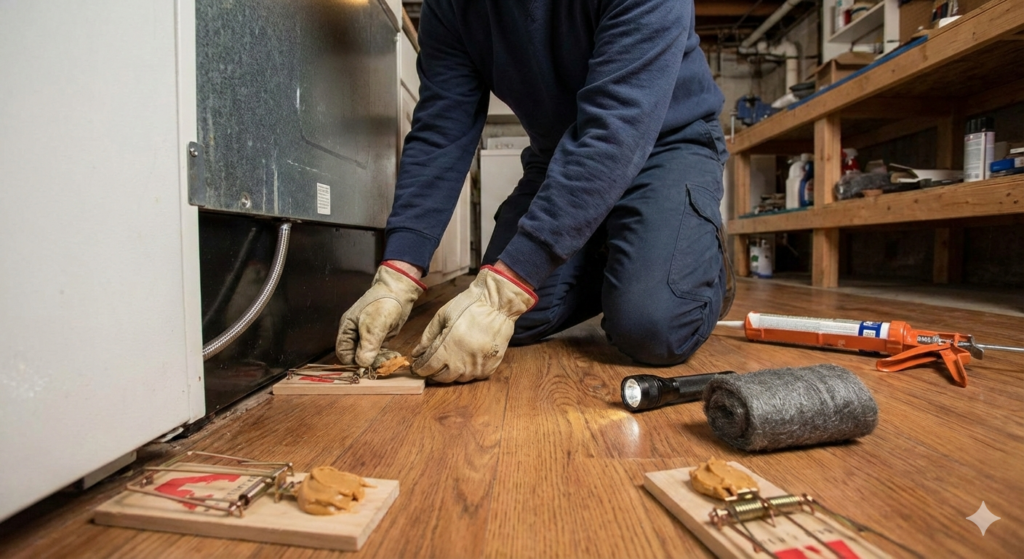
Grab some steel wool and stuff it into small holes that mice can’t chew through. Cover the steel wool with caulk or foam sealant to keep it in place. For bigger gaps, use quarter-inch hardware cloth or metal flashing.
Put door sweeps on your exterior doors if there’s more than 6mm of space underneath. You must also replace any damaged weatherstripping around windows and doors. Seal up openings around plumbing and electrical lines with the right materials for those applications.
Set Traps the Right Way
Snap traps work way better than glue traps when you’re trying to clear mice out of walls and attics. Put them perpendicular to the walls where you’ve seen droppings or grease marks. Mice travel along edges; they don’t just run across the middle of rooms.
Use peanut butter, chocolate, or dried fruit for bait. Start with at least 6 to 10 traps. More traps mean you’ll catch them faster. Check the traps every day and dispose of dead mice in sealed plastic bags.
Clean Up Properly
Put on gloves and a mask when you’re cleaning up mouse droppings and urine. Spray everything with disinfectant before you start sweeping. You don’t want to breathe in dried particles: Hantavirus and other nasty diseases spread through dried rodent waste.
If the infestation is severe, remove contaminated insulation. Switch from cardboard boxes to sealed plastic containers for storage. Use a vacuum with a HEPA filter to catch allergens and pathogens.
Natural Ways for Mice Removal
- Peppermint oil can help keep them away, but it won’t eliminate an existing infestation. Soak cotton balls in pure peppermint oil and stick them near entry points. You’ll need to refresh them every week.
- Ultrasonic repellents make high-pitched sounds that are supposed to bother rodents. Sometimes they work, sometimes they don’t. Mice often become accustomed to the noise. Don’t count on these things to solve your problem.
- Diatomaceous earth (ensure it’s food-grade) irritates rodent skin and lungs when they walk through it. Sprinkle it in attics and along the paths they use. It’s safe around people and pets, but you’ll need to put down more after it gets wet.
What Professionals Do Differently
Pest control companies use Integrated Pest Management, which basically means they employ a multifaceted approach to the problem, rather than relying on a single solution. Professional exterminators have access to commercial-grade rodenticides and specialized equipment that is not available at the hardware store.
Bait stations contain poison bait inside boxes that kids and pets can’t open. Mice eat from them multiple times and then die within a few days. Experts know exactly where to put these to get the best results while keeping everyone safe.
When technicians perform exclusion work, they ensure that every entry point is sealed with the correct materials. That prevents new mice from getting in after you’ve dealt with the ones you currently have.
Thermal imaging cameras can detect mice inside walls without the need to cut them open. This technology identifies the locations of nests and areas with the most activity, enabling targeted treatment.

Prevention That Actually Works
Outside Your House
Cut back tree branches and bushes so they’re not touching your house. Mice use plants to gain access to your roof and locate upper-story entry points. Keep at least 30 centimeters of space.
Store firewood at least 6 meters away from your house and keep it up off the ground. Rodents make nests in woodpiles and then move into your house.
Keep your garbage in bins with tight lids and empty them regularly. Don’t leave pet food outside overnight. Bird feeders can attract rodents if not used properly, so it’s essential to clean up spilled seed daily and put baffles on the poles to prevent rodents from climbing.
Inside Your House
Store pantry items in glass or heavy plastic containers with lids that seal tightly. Mice chew right through cardboard, paper, and thin plastic.
Fix leaky pipes and faucets right away. Mice need water, and they’re drawn to moisture. Repair any water-damaged wood, as it gets softer and more susceptible to gnawing.
Clear out clutter in basements, garages, and attics. Mice hide and build nests in stacked boxes and piles of junk. Consider using plastic bins instead of cardboard.
Clean food crumbs and spills right away. Make it a habit to sanitize countertops each evening. Sweep and vacuum often, paying extra attention to the kitchen and dining spaces.
When You Should Just Call The Professionals
- Call professionals immediately if you notice mice during the day. Mice are active at night, so if they’re out when it’s light, that means there are so many of them that they’re competing for space and resources.
- If you’ve had traps set for two weeks and haven’t caught anything, even though you can tell they’re still there, you’re dealing with trap-shy rodents or infestations inside walls you can’t reach. Professionals have the tools and know-how to handle that.
- Recurring infestations after you’ve tried DIY approaches mean you haven’t found all the entry points, or you’re missing something. Professional inspection will catch what you’re not seeing.
- Health concerns are a good reason to bring in help. If you’re pregnant, have a baby, or have elderly family members or anyone with a weakened immune system, the risks from rodent-borne diseases are too high to mess around.
- Step-by-Step Action Plan
Here’s what you need to do for effective mice control:
Week 1: Start with a thorough inspection of both the inside and outside. Take photos of every entry point you find. Buy what you need: snaptraps, bait, steel wool, caulk, gloves, and masks. Set 6 to 10 traps in the areas with the most activity. Begin sealing the obvious entry points outside.
Week 2: Check your traps every day and reset them. Close off and secure any gaps or openings, indoors and outdoors alike. Eliminate food sources and enhance the cleanliness of everything. Install door sweeps and replace the weatherstripping. Watch for new droppings or signs of activity.
Week 3: Check on the traps. If you’re catching fewer mice, you’re making progress. Seal all entry points you found during monitoring and deep-clean the affected areas with disinfectant. Move traps to any new spots where you see activity. Consider seeking professional help if the situation hasn’t improved.
Week 4: Continue monitoring, but you can now use fewer traps. Finish all the exclusion work. Implement your long-term prevention measures. Plan to check everything again in a month. Write down what worked so you remember for next time.
Conclusion: Get Rid of Mice Before They Get too Comfortable
Mice removal isn’t rocket science, but it does take effort. You need to seal every crack, set traps in the right spots, and clean up properly.
Most homes can handle this in a few weeks if you stay on top of it. But if you’re hearing scratching every night or finding droppings everywhere, don’t wait around.
The longer mice stay, the worse the damage becomes and the higher your bills rise. Deal with it now: either tackle it yourself by following these steps, or call 4K Pest Control, who can get it done quickly.
FAQs About Mice Control
Q1:How long does it take to get mice out of walls and attics?
You’ll usually see real results in 2 to 4 weeks if you’re consistent with trapping and sealing entry points. Severe infestations in large houses can take 6 to 8 weeks of intensive work. Professional services speed things up because they use multiple approaches at once and can get into places you can’t reach on your own.
Q2:Can mice die in my walls and cause smell problems?
Yes, mice that die inside wall cavities create a strong smell from decomposition that lasts 1 to 2 weeks. This happens a lot when people use poison bait without putting it in the right spots. The smell gets worse when it’s warm. If it happens, identify the wall section involved, drill small holes for air flow, and use odor absorbers until the decomposition process finishes naturally.
Q3: Why can’t I just use poison to get rid of mice in my walls?
A: Poison causes mice to die inside your walls where you can’t reach them, creating terrible odors that last weeks and attract other pests. Professional mouse control services, such as 4K Pest Control, use strategic trap placement and exclusion methods that eliminate rodents without the unpleasant smell problem. Poison also poses serious risks to children and pets who might accidentally access it, while professional methods prioritize safety alongside effectiveness.
Q4:Are mice in my attic dangerous for my family?
Yes, mice in attics pose health risks through their droppings, urine, and the parasites they carry. Hantavirus, Salmonella, and Leptospirosis spread through contact with rodent waste. Mice also carry fleas, mites, and ticks into your home. Their ongoing chewing can ruin electrical wires and significantly raise the chances of a fire hazard. Children and elderly people face a higher risk from these pathogens and allergens.
Q5:Do those ultrasonic mouse repellents actually work on walls?
Ultrasonic repellents do not work to control mice, especially inside walls. Sound doesn’t travel well through walls, and rodents adapt quickly to constant noise. Scientific research shows these devices don’t create any lasting deterrent effect. Save your money and use proven methods instead, such as snap traps, exclusion work, and improved sanitation, which actually address the root problem rather than relying on gimmicks.
Q6:How can I tell if mice are still in my walls after I’ve treated them?
Watch for fresh droppings, new gnaw marks, and scratching sounds when it’s quiet at night. Place monitoring devices along baseboards if mice are still active; they’ll set these off. Check the entry points you sealed to see if there’s new damage or if they’ve been reopened. Fresh grease marks on the walls mean they’re still moving around. If you don’t see any signs for 2 to 3 weeks, your mouse removal work has probably been successful.