
Found a trail of ants marching across your kitchen counter this morning? It happens in Bradford homes more than most people realise, and it almost never solves itself.. Ant infestations are one of the most common pest complaints from homeowners across Bradford, Ontario, especially as the seasons shift and ants start moving indoors looking for food, water, and warmth.
The problem is that most homeowners try to handle it themselves, only to find the same ants back a week later. That’s because what you see on the surface is rarely the full picture. Ant control exterminators deal with the colony, not just the stragglers you spot walking along your baseboards. This guide covers everything you need to know, from identifying what you’re dealing with, to understanding when it’s time to stop guessing and call a professional.
Why Ants Are So Hard to Get Rid of Without Help
You’re Only Seeing About 10% of the Problem
A lot of homeowners miss this completely and it’s usually why the problem keeps coming back. When you see a line of ants crossing your floor, those are worker ants, the ones sent out to forage. The actual ant colony, including the queen ant and her larvae, is tucked away somewhere you probably haven’t looked. Inside wall voids, under your foundation, deep in the soil beneath your patio, or inside the wooden framing of your home.
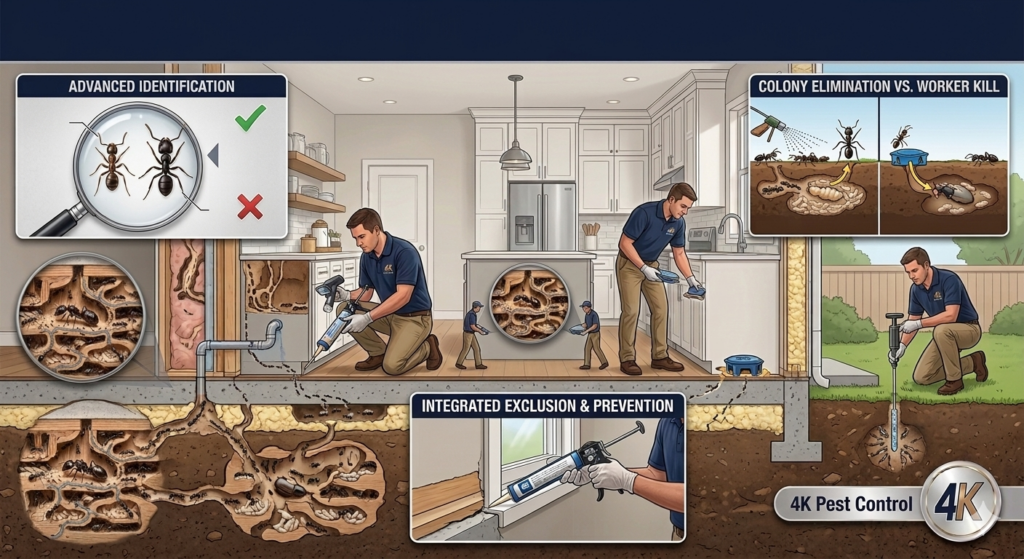
Here’s what makes it worse. One queen ant can keep a colony growing almost indefinitely, producing thousands of new workers at a time.. If you kill the workers but leave the colony intact, the problem simply resets. New workers take their place, new pheromone trails get laid down, and within days you’re right back where you started.
Over the counter sprays make this even messier. When you spray worker ants directly, you sometimes cause a process called colony splitting where the colony panics and divides into multiple satellite nests. Instead of one problem, you now have three or four.
Bradford’s Climate Makes This Worse in Specific Seasons
In Bradford and the broader GTA, ant pressure typically spikes in two windows. Late spring when colonies wake up and start expanding, and late summer into early fall when ants push indoors ahead of colder temperatures. Carpenter ants, which are especially common in older Bradford homes, are most active from May through August. Pavement ants tend to show up along driveways and garage floors through the summer months. Pharaoh ants are a year round indoor problem, particularly in homes with any moisture issues.
Knowing which species you’re dealing with is step one. And honestly, getting that wrong is one of the biggest reasons DIY treatments fail.
What Ant Control Exterminators Actually Do Differently
Step 1 : Proper Identification First
The first thing a qualified ant control exterminator does before touching a single product is identify the species. Most people skip past this and it ends up costing them weeks of dealing with the same problem.. Carpenter ants nest in wood and need treatments that penetrate deep into structural timber and standard surface sprays don’t reach them. Pharaoh ants are notoriously difficult because they require specific bait formulations. Many common insecticides actually trigger colony splitting in pharaoh ants, making the infestation significantly worse.
A professional uses their knowledge of ant behavior, colony structure, and seasonal patterns to figure out where the nests are, not just where the ants are visible.
Step 2 : Targeted Treatment Based on Species and Location
Once the species is confirmed, the exterminator puts together a treatment plan that matches the actual problem. This might include:
- Gel baits placed along active ant trails so workers carry the toxic bait back to the queen ant and colony through the process of trophallaxis, essentially the ants poisoning their own nest from the inside out
- Granular insecticides spread around the perimeter of the home and across yard areas to create a protective band
- Residual insecticide sprays applied to entry points, baseboards, window frames, and anywhere ants are actively moving
- Crack and crevice treatments using professional grade gel or powder formulations in wall voids, under appliances, and around plumbing penetrations
- Direct nest treatments for outdoor ant hills and mounds found in the yard or along the foundation
The key difference between DIY and professional treatment is that professionals hit all of these simultaneously, rather than trying one thing at a time.
Step 3: Exclusion and Prevention Built Into the Service
Good ant control exterminators don’t just treat the active infestation. They help you prevent the next one. After treatment, expect recommendations around:
- Sealing entry points with silicone caulk around window sills, door frames, dryer vents, pipe penetrations, and baseboards
- Fixing leaky pipes or faucets that are creating moisture sources
- Trimming tree limbs that touch the roofline as carpenter ants commonly use branches as a bridge onto your roof
- Proper food storage using airtight containers
- Managing pet food dishes and cleaning up food crumbs regularly
- Reviewing outdoor areas like potted plant soil, woodpiles, and landscaping near the foundation
These aren’t suggestions thrown in at the end. They’re critical steps because without them, even the best treatment won’t hold long term.
Step 4: Follow Up and Monitoring
A single treatment visit is rarely the end of the story with ants. Colonies can be large, nests can spread across multiple locations, and some species take weeks to fully collapse. Any professional worth calling will tell you this upfront.
Follow up visits are where the technician checks bait station activity, looks for signs the colony is still active, and reapplies where needed. For Bradford homeowners dealing with ants every year, a seasonal maintenance program keeps you ahead of the problem rather than constantly reacting to it.
Real Situations Bradford Homeowners Face
The Carpenter Ant Problem in Older Homes
Bradford has a solid mix of older homes, particularly in established neighborhoods closer to the town center. These properties often have wooden structures including support joists, beams, window framing, and decking that are vulnerable to carpenter ant activity, especially if there’s any moisture damage involved.
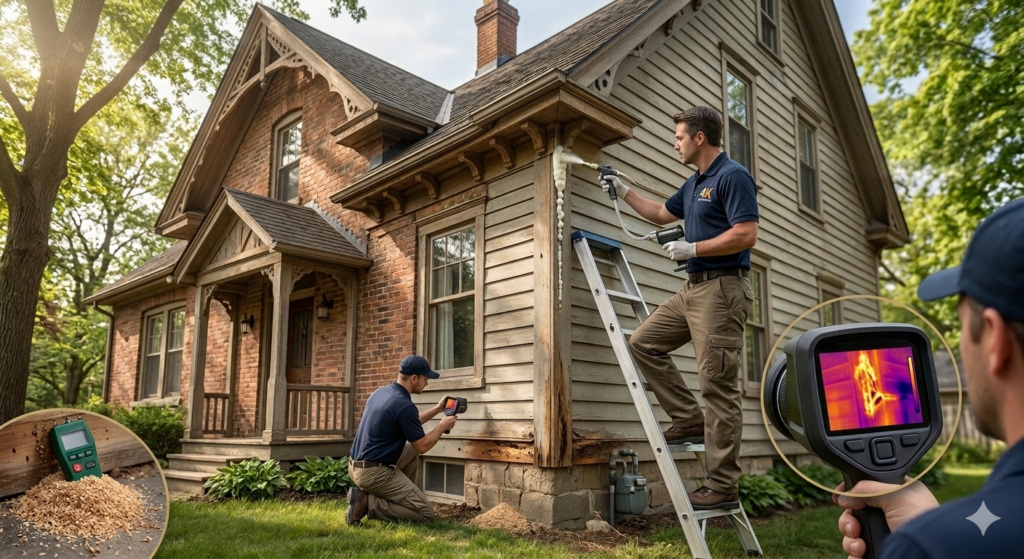
Unlike termites, carpenter ants don’t eat wood. They excavate it, hollowing out galleries to build their nests. The early sign is often wood shavings or sawdust like frass appearing near baseboards or under windows. Homeowners often miss this for months because it looks like ordinary dust or debris.
By the time a homeowner notices rustling noises inside the walls or soft spots in wooden trim, the colony has usually been active for a long time. At this point, a professional inspection using tools like moisture meters is essential to locate the full extent of the nest, because what’s visible from the outside rarely tells the whole story.
When a Small Ant Problem Turns Into Something Bigger
A Bradford homeowner noticed a handful of small ants near their kitchen sink in early May. They picked up a spray from the hardware store, treated the area, and forgot about it. By July, they had ants in three rooms, including a trail running from a gap behind the dishwasher all the way to a nest they eventually found inside the wall cavity behind the cabinets.
This is a very common pattern. Odorous house ants and pavement ants, two of the most frequent species in Bradford homes, spread quickly once they establish an indoor colony. The small problem in spring becomes a full infestation by summer if the ant colony and queen aren’t targeted directly.
This is precisely the situation ant control exterminators are trained for. Getting ahead of it in May is significantly cheaper and faster than dealing with the consequences in July.
Things You Can Do Between Professional Visits
Even after calling in professionals, there are things you should be doing at home to support the treatment and protect your space going forward.
- Clean pheromone trails with dish soap and water. This disrupts the scent trail that guides other ants into your home
- Spread diatomaceous earth (DE) along entry points like window sills and under door gaps. DE’s razor sharp edges penetrate the exoskeleton of ants and dehydrate them naturally
- Place essential oil sprays including peppermint, eucalyptus, or lemon oil diluted in water around areas where ants have been active to disrupt their chemical trails
- Keep garbage bins sealed tightly indoors and outdoors, and clean around them weekly
- Store all dry goods, including pet food, in airtight containers
- Check your crawl space, attic, and any moisture prone areas regularly for early signs of activity
These aren’t substitutes for professional treatment but they make a real difference in keeping ants from coming back between visits.
Don’t Let Ants Take Over; Get the Right Help Before It Gets Worse
Ants are patient, persistent, and very good at staying hidden until the problem is already significant. The combination of proper species identification, targeted colony treatment, professional grade products, and smart exclusion work is what actually solves the problem and not just a can of spray from the hardware store.
Whether you’re dealing with carpenter ants working through your walls, a trail of pavement ants crossing your garage floor every morning, or pharaoh ants appearing in your kitchen no matter what you try, ant control exterminators have the tools and training to handle it properly.
If you’re in Bradford or the surrounding area and you’re ready to stop guessing, 4K Pest Control is here to help. Our team handles ant infestations of all sizes with proven, targeted treatments designed to eliminate the colony and not just the ants you can see. Contact 4K Pest Control today and let’s build a plan that actually works for your home.
Frequently Asked Questions
Q1: How do I know if I need ant control exterminators or if DIY will work?
If you’ve tried two or more over the counter products without lasting results, or if you’re seeing ants in multiple rooms, it’s time to call a professional. Large colonies including carpenter ants or pharaoh ants almost always need professional grade treatment to fully eliminate. DIY methods work best for very minor, early stage problems caught quickly.
Q2: How long does a professional ant treatment take to work?
It depends on the species and the size of the colony. Gel bait treatments work through trophallaxis, meaning the workers carry the bait back to the queen and this process can take one to two weeks to collapse the colony fully. Your exterminator will typically schedule a follow up to confirm the colony has been eliminated before closing the job.
Q3: Are the products ant control exterminators use safe for kids and pets?
Most professional pest control companies in Bradford use targeted treatments that are applied directly to specific areas and not broadcast sprayed throughout your living space. After treatment, your exterminator will give you a re entry window, which is typically a few hours. Always ask your provider to walk you through any products used and their safety profile.
Q4: What attracts ants to Bradford homes specifically?
Ants come in looking for food, water, and shelter, the same three things everywhere. In Bradford specifically, late summer heat drives ants indoors looking for moisture, and older homes with wood framing are particularly vulnerable to carpenter ants. Keeping food sealed, fixing plumbing leaks, and trimming vegetation away from the home covers the main attractants.
Q5: Can ants cause structural damage to my home?
Carpenter ants absolutely can. Unlike termites, they don’t eat wood but they hollow it out to build nesting galleries, and over time this weakens support joists, beams, and framing. Left untreated for years, carpenter ant damage can become structurally significant and expensive to repair. Other species like pharaoh ants and odorous house ants don’t damage structure but they contaminate food and are very difficult to eliminate without professional help.
Q6: How often should I have my Bradford home professionally treated for ants?
For most Bradford homeowners, a seasonal treatment in spring when colonies become active, combined with a preventive perimeter treatment in late summer is a solid approach. Homes with a history of carpenter ant activity benefit from annual professional inspections, even in years when you haven’t seen obvious signs. Early detection is always less expensive than late intervention.