
Canadian homeowners face serious challenges when dealing with cockroach infestations. The battle between the American and German Cockroaches requires understanding which species you’re fighting. German & American roaches differ dramatically in size, behavior, and elimination strategies. German cockroaches in Canada have become increasingly common in Ontario cities like Bradford, while American cockroaches typically enter through plumbing systems and floor drains.
What Are German Cockroaches and American Cockroaches?
Understanding German Roaches
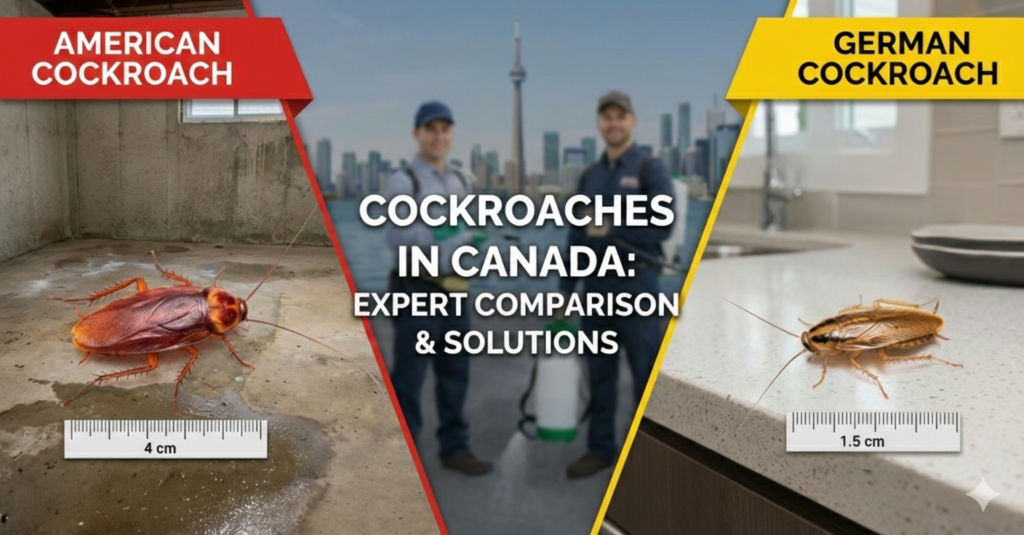
German cockroaches (Blattella germanica) represent the most problematic indoor pest species worldwide. These small cockroaches measure just ½ to ⅝ inch in length with distinctive tan or light brown coloring. Two parallel dark stripes run along the pronotum (back of the head), making roach ID straightforward. Despite their name, these pests didn’t originate in Germany but spread globally through human commerce.
German roaches prefer warm, humid environments near food and water sources. They establish harborage sites in kitchens, bathrooms, and utility rooms. Their flat body shape allows them to squeeze through cracks and crevices as narrow as 1/32 inch. They possess wings and rarely use them. They prefer to scurry rapidly when they get disturbed.
Understanding American Cockroaches
American cockroaches (Periplaneta americana) rank as the largest structure-infesting species in Canada. These giants reach 1.5 to 2 inches in length with reddish-brown bodies and a distinctive yellowish figure-eight pattern on the back of their heads. Canadian cockroaches of this species often enter homes through sewer systems and storm drains.
Unlike their German counterparts, American roaches thrive both indoors and outdoors. They prefer damp, dark areas like basements, crawl spaces, and floor drains. These pests demonstrate strong flying abilities, especially in warm weather above 85°F. Their presence often indicates moisture problems or plumbing issues in your home.
Behavior Differences – German Roaches vs American Roaches
Habitat Preferences
German & American roaches show completely different location preferences. German cockroaches remain exclusively indoors, establishing populations in kitchens, bathrooms, behind appliances, and inside cabinets. They need constant access to food, water, and warmth (70-75°F). They can hitchhike in grocery bags, cardboard boxes, used appliances, and furniture.
American cockroaches primarily live outdoors in sewers, storm drains, mulched areas, and garbage dumps. They enter buildings through floor drains, pipe chases, wall voids, and foundation cracks. Basements and crawl spaces with high humidity attract these pests. They tolerate cooler temperatures than German roaches but still prefer warmth.
Activity Patterns
Both species are nocturnal, becoming active at night when searching for food. German cockroaches scatter immediately when lights turn on, disappearing into nearby cracks and crevices. They travel along walls and prefer horizontal surfaces. American cockroaches move more slowly but cover greater distances. They climb walls easily and often rest on ceilings.
Feeding Habits
German roaches consume virtually anything: food crumbs, grease, toothpaste, soap, book bindings, and glue. They prefer starchy foods, sweets, and meat products. These pests must eat regularly due to their high metabolic rates. American cockroaches feed on decaying organic matter, garbage, pet food, and cardboard. They can survive one month without food but need water every week.
Reproduction and Life Cycle
German Cockroach Life Cycle
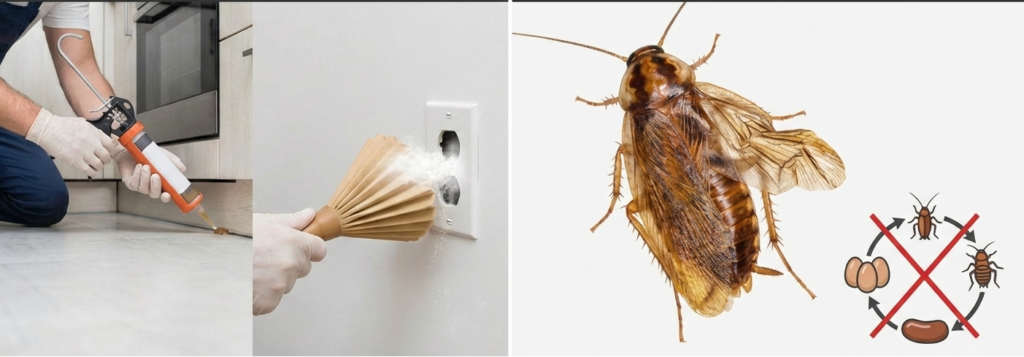
The German roach life cycle proceeds at an alarming speed. Females carry egg capsules (oothecae) containing 30-40 eggs until 1-2 days before hatching. This protection ensures high survival rates. The life cycle of German roaches completes in just 50-60 days under ideal conditions. One female produces 4-8 egg cases during her lifetime, creating up to 400 offspring annually.
Nymphs undergo 6-7 molts over several weeks, gradually developing adult features. German roach infestation escalates rapidly because of exponential population growth. A single pregnant female can spawn 10,000 descendants in one year under optimal conditions. This explosive breeding makes German roaches extremely difficult to eliminate without professional intervention.
American Cockroach Life Cycle
American roaches reproduce more slowly but live longer. Females produce one egg case every 2-4 weeks, each containing 14-16 eggs. They glue oothecae to hidden surfaces near food sources rather than carrying them. Nymphs take 6-12 months to mature, undergoing 13 molts. Adults live 1-2 years, much longer than German cockroaches (3-6 months).
Despite slower reproduction, American cockroach populations build steadily. One female produces 150+ offspring during her lifetime. The extended life cycle means multiple generations coexist simultaneously, complicating control efforts.
Health Risks and Contamination
Disease Transmission
Both cockroach species pose serious health threats. They carry bacteria, including Salmonella, E. coli, and cholera pathogens, on their bodies and legs. German cockroaches contaminate food preparation surfaces, dishes, and stored food with fecal matter and saliva. American cockroaches track sewage bacteria from drains throughout your home.
Cockroaches spread food poisoning, gastroenteritis, dysentery, and typhoid fever. They transfer germs by walking across contaminated surfaces and then crawling over clean areas. Their droppings and shed skins accumulate in hidden areas, creating ongoing contamination.
Allergens and Asthma
German cockroach feces, saliva, and body parts trigger severe allergic reactions and asthma attacks. Studies show cockroach allergens affect 60% of urban asthma sufferers. German roach poop appears as small, dark specks resembling black pepper or coffee grounds. These droppings accumulate behind appliances, inside cabinets, and along baseboards.
American cockroach waste produces similar allergens but in larger quantities due to the pest’s size. Their musty odor indicates heavy infestations. Children exposed to cockroach allergens face increased asthma hospitalization risks. Proper elimination and sanitation reduce these health hazards significantly.
Signs of Infestation
German Roach Infestation Signs
German roach infestation indicators include:
- Live cockroaches scurrying when lights turn on, especially in kitchens and bathrooms
- German roach poop scattered along countertops, inside drawers, and behind appliances
- Dark staining in corners and along wall-floor junctions where pests travel
- Egg cases (oothecae) found in protected areas – small, brown, purse-shaped capsules
- Musty odor intensifies with population size
- Shed skins from molting nymphs in hiding spots
Check under sinks, behind refrigerators, inside stoves, and within bathroom cabinets. German cockroaches prefer confined spaces close to moisture and food. Even seeing one or two during the daytime suggests a serious infestation since these pests avoid light.
American Cockroach Infestation Signs
American cockroach evidence appears differently:
- Large droppings resembling mouse feces with blunt ends and ridges
- Dead cockroaches in basements, near floor drains, and along foundation walls
- Egg cases glued to hidden surfaces, larger than German roach cases at 8mm long
- Strong, pungent odor from pheromones used for communication
- Smear marks along walls where pests regularly travel
- Sightings of flying cockroaches near outdoor lights at night
Inspect sewer connections, utility room drains, crawl spaces, and areas with water damage. American roaches indicate moisture problems requiring immediate attention.
Natural and Chemical Solutions
Natural Methods
Diatomaceous Earth (Food Grade)
This natural powder cuts through cockroach exoskeletons, causing fatal dehydration. Sprinkle in cracks, behind appliances, and along baseboards where pests travel. Safe around pets and children when food-grade, but reapply after cleaning or moisture exposure.
Boric Acid Powder
Mix with sugar (3:1 ratio) to create attractive bait that damages digestive systems. Apply thin layers where roaches travel; thick piles cause avoidance. Highly toxic to insects but low toxicity to mammals. Keep away from food prep areas and children.
Essential Oil Sprays
Peppermint, eucalyptus, and tea tree oils repel cockroaches through strong scents. Mix 10-15 drops per cup of water and spray entry points and baseboards. Provides a temporary deterrent only, not primary elimination. Reapply every 2-3 days as scent fades.
Bay Leaves and Cucumber
Place in cabinets and pantries as a natural repellent. Pleasant smell for humans, unpleasant to pests. Replace monthly for effectiveness. Supports other control methods but won’t eliminate infestations alone.
Professional Chemical Treatments
Gel Baits
Most effective against German cockroaches. Contains attractants plus slow-acting poison that roaches share throughout colonies. Top German cockroach killer brands apply pea-sized drops in corners, behind appliances, and inside cabinets. Replace every 2-3 weeks.
Insect Growth Regulators (IGRs)
Disrupt the life cycle by preventing nymphs from becoming reproductive adults. Long-lasting effects (3-6 months) after a single application. Must combine with gel baits to eliminate existing adults. Apply to harborage sites and wall voids.
Residual Sprays
Creates barriers along baseboards and entry points. Effective against American cockroaches entering from sewers and drains. Lasts 30-90 days depending on the product. Professional-grade products are more effective than retail. Avoid spraying where gel baits are placed.
Dust Formulations
Boric acid, diatomaceous earth, and silica gel options for long-term control. Apply in wall voids, attics, and inaccessible areas. Remains effective for years if undisturbed. Best for prevention in hidden spaces where liquids cannot reach.
Prevention Strategies
Do’s and Don’ts
DO:
- Store food in airtight containers immediately
- Clean kitchen counters and sinks nightly
- Take garbage out daily, keep bins sealed
- Fix plumbing leaks within 24 hours
- Vacuum regularly, especially kitchens and bathrooms
- Inspect groceries and packages before bringing them indoors
- Run water in unused drains weekly
- Maintain dehumidifiers in basements
DON’T:
- Leave dirty dishes overnight in the sink
- Keep cardboard boxes in storage areas
- Allow pet food to sit out continuously
- Ignore small water leaks or moisture issues
- Store items directly against walls (reduces airflow)
- Use foggers or bug bombs (ineffective, spreads pests)
- Assume the problem is solved after seeing fewer cockroaches
- Mix different pesticide products
Long-Term Prevention
Monthly Maintenance:
- Inspect potential harborage sites with a flashlight
- Check under sinks, behind appliances for leaks
- Vacuum cracks and crevices thoroughly
- Refresh bait stations in monitoring locations
Quarterly Actions:
- Seal new cracks appearing in walls, foundation
- Check door sweeps and weather stripping condition
- Inspect crawl spaces for moisture and pest activity
- Review sanitation practices, adjust as needed
Annual Professional Inspection:
- Comprehensive assessment by a licensed pest control expert
- Identifies hidden issues before populations build
- Updates treatment plans based on current conditions
- Costs less than emergency extermination services
Cockroach Control in Ontario and Bradford
Regional Considerations
Cockroach Ontario populations vary by season and urban density. German cockroaches in Canada thrive year-round in heated buildings regardless of outdoor temperatures. Ontario cockroaches face harsh winters, driving both species indoors from October through April. Bradford residents experience similar patterns to those of other Ontario communities.
Cockroaches in Ontario enter homes primarily through:
- Multi-unit buildings with shared walls, plumbing
- Used furniture and appliances from infested locations
- Grocery stores and restaurants with poor sanitation
- Sewers and municipal drain systems (American cockroaches)
Roaches in Ontario concentrate in urban areas like Toronto, Ottawa, Hamilton, and surrounding regions, including Bradford. Canadian cockroaches face fewer outdoor survival options than warmer climates, making indoor infestations more persistent and severe.
Local Treatment Options
Ontario residents should:
- Choose pest control companies licensed by the Ministry of Environment
- Verify technician training and IPM (Integrated Pest Management) certification
- Request cockroach-specific treatment plans, not general pest services
- Understand tenant/landlord responsibilities in multi-unit buildings
German cockroach Ontario cases require coordinated building-wide treatment in apartments and condos. Single-unit approaches fail when pests travel between suites through wall voids and utility chases. Bradford homeowners in single-family homes face easier elimination with proper treatment.
Canada cockroach regulations prohibit certain pesticides available elsewhere. Professional companies use approved products proven effective in Canadian conditions. DIY products sold retail often contain weaker formulations than professional-grade materials.
Pros and Cons of DIY vs Professional Treatment
DIY Treatment
PROS:
- Lower immediate costs
- Start treatment immediately without scheduling
- Learn prevention skills through hands-on experience
- Control timing and methods used
- Privacy – no strangers entering the home
- Suitable for very small, recent infestations
CONS:
- Low success rate against established German roach infestation (40-60%)
- Requires 10-20+ hours of research, application, and monitoring
- Retail products weaker than professional formulations
- Easy to misapply treatments, worsening problems
- Insecticide resistance from improper use
- No warranty or guarantee of elimination
- Health risks from incorrect pesticide handling
- Cockroach populations may scatter, spreading the infestation
Professional Treatment
PROS:
- 90-98% elimination success rate with proper protocol
- Expert roach ID and species-specific strategies
- Access to professional-grade German cockroach killer products
- Warranty coverage with re-treatment guarantees
- Saves 15-20 hours of homeowner time
- Comprehensive inspection finds hidden issues
- Building-wide coordination in multi-unit properties
- Safe pesticide application protecting family, pets
CONS:
- Higher upfront investment
- Requires scheduling, home access for technicians
- Must prep home before treatments (cleaning, moving items)
- Multiple visits needed over several weeks
- Finding a reputable company takes research
- Service contracts may have cancellation fees
- Some treatments require temporary relocation (rare)
Conclusion
Understanding the American cockroach vs German cockroach differences proves essential for successful elimination. German roaches demand aggressive indoor treatment targeting rapid reproduction and insecticide resistance, while American cockroaches require moisture control and exclusion work focusing on drains and foundation access points. Cockroach Ontario residents face year-round indoor pressure as harsh winters drive pests into heated buildings.
German vs American cockroach control costs, methods, and timelines differ significantly. Early identification prevents small problems from becoming severe infestations requiring extensive professional intervention. Whether you choose DIY approaches or professional services, consistent sanitation, exclusion, and monitoring remain critical for long-term success.
Apply the step-by-step strategies and use the natural and chemical treatments provided throughout this guide. Monitor results weekly, adjust treatments as needed, and don’t hesitate to contact licensed pest control experts when populations persist. Bradford and Ontario homeowners deserve cockroach-free homes, and achieve lasting results through informed, persistent effort.
FAQs About American VS German Cockroaches
1. What’s the main difference between the American cockroach vs German cockroach?
German cockroaches measure ½ to ⅝ inch with light brown coloring and two dark stripes. American cockroaches reach 1.5-2 inches with reddish-brown bodies. German roaches breed faster (400 offspring yearly) and stay indoors. American cockroaches enter through drains and fly frequently.
2. How do German cockroaches get into your house compared to American roaches?
German cockroaches get into your house by hitchhiking in grocery bags, boxes, used furniture, and appliances. American cockroaches enter through sewer lines, floor drains, foundation cracks, and gaps. German roaches spread building-to-building; American roaches originate outdoors.
3. What does German roach poop look like versus American roach droppings?
German roach poop appears as tiny dark specks resembling black pepper or coffee grounds on countertops and drawers. American cockroach droppings look like small cylindrical pellets with ridges, similar to mouse feces. Both contain allergens triggering asthma and allergic reactions.
4. Which cockroach is harder to eliminate, German or American?
German roach infestation presents extreme challenges. Rapid reproduction (50-60 day life cycle), insecticide resistance to 40+ products, and indoor habitat make German roaches the hardest to eradicate. American cockroaches respond better to exclusion and moisture control. To get rid of German cockroaches, professional intervention is recommended.
5. Do German cockroaches bite people or spread diseases?
Rarely. Both species carry Salmonella, E. coli, and bacteria, contaminating food and surfaces. German cockroach droppings, saliva, and shed skins create allergens triggering asthma attacks. American cockroaches track sewage pathogens. Both spread food poisoning and gastroenteritis.
6. How long can cockroaches survive in Canadian winters?
Canadian cockroaches don’t survive outdoors during Ontario winters. German cockroaches in Canada live in heated buildings year-round, dying below 32°F. American cockroaches tolerate cooler conditions but need warmth. Cockroaches in Ontario move from sewers into basements below 45°F. Winter drives infestations indoors.